Leaving Veja de Frontera and the Bald-Headed Ibises, we started out in the direction of Cadiz, stopping for lunch at the small port of Sancti Petri. The view and weather were fabulous.
We bypassed Cadiz and made a night stop in Rota, which is further up the coast, before travelling to Sanlúcar de Barrameda.
In Sanlúcar, we started our exploration of the Parque Nacional de Doñanas Eastern sector. The Doñana is a massive area with borders on both banks of the Rio Guadalquivir. It is probably Europe's best birdwatching location.

Isla Sancti Petri and its Castello.

Beyond Sanlúcar, Bonanza's coastal salt pans are a thriving business with great lorries and lots of dust. Further along the coast, however, the Tarmacadam road disintegrates into a dirt track, and it is here that we find disused saltpans falling into disrepair. This is where ships enter the river and head for Sevilla with their cargo, and this is the remote corner of the Parque where we started our exploration.

It is flat out there, just a few old fishing boats rotting away on this tidal marshland.

Dead, scrawny trees line the river, perfect resting places for Ospreys and Short-toed Eagles on their migration.
Across the river are the vast sand dunes stretching along the Playa de Castilla coast from Matalascañas.

Another Short-Toed Eagle perches whilst scanning the surrounding marshland.

After some time, it takes to the air.

Circling over the Marsh in search of a meal.

With a huge wingspan, the Snake Eagle, as it is also known, soars overhead.

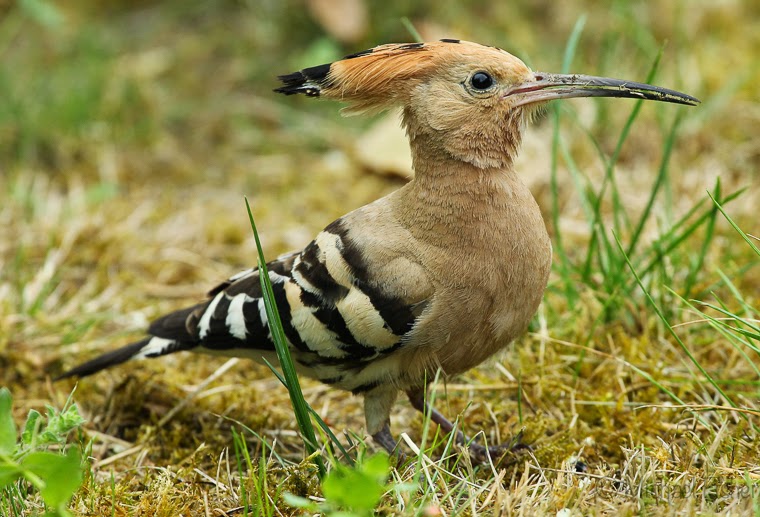
A Eurasian Hoopoe takes flight.

We found many warblers skulking in the dense scrub along the river bank.
This one is a Subalpine warbler.

Countless waterways and fish farms lined the road as we moved towards Trebujena.
There were many wading species, and here was a snipe; the river bank baked and fractured from the immense heat.

It was late afternoon, and we needed to be on the opposite side of the river. Usually, this would entail circumnavigating Sevilla, but on this occasion, we decided to try crossing the Rio Guadalquivir on the small car ferry that takes you across the river to Coria del Rio. We were still determining if we could get on to it, as the slipway was steep and not helped by the ebbing tide. But all went well, with a payment of €4.30, and we were across the river.

The following morning, we saw a Short-Eared Owl flying along the roadside as we continued to the Dehesa de Abajo.

"I messed up with the focus."

Early morning at the Dehesa de Abajo, with its vast White Stork colony, the largest in Europe.
Ancient olive trees line the route up to the visitor centre,
and every olive tree has a nest similar to the one shown above.
and every olive tree has a nest similar to the one shown above.
The Storks seemed as miserable as us in the damp mist and gloom.

Below the visitor centre lies the La Rianzuela, a large lagoon. Water flows in from the
Arroyo de Majalberraque. It offers two hides to watch the birds.
Here, a Marsh Harrier hunts in the early morning mist.
Arroyo de Majalberraque. It offers two hides to watch the birds.
Here, a Marsh Harrier hunts in the early morning mist.

A Grey Heron catches what little light there is.
From the Dehesa, we move towards the José Antonio Valverde, better known as the JAV, visitor centre. It is some 26 kilometres out on the Doñana, and the access is through rough clay roads.
Slow progress on the genuinely potholed and uncomfortable road takes you alongside the Brazo de la Torre, a superb birdwatching area. You need good weather for a visit here; ours was getting worse by the minute!

We chance on a sleeping Barn Owl in the Tamarisk.

We stopped at the vast concrete pumping station, which looks derelict.
At the rear of this neglected building, we found a colony of Black-Crowned Night Herons roosting, just as if they were in the trees or scrub.
Kestrels were nesting inside the building, their access through the broken windows.

Before we departed from our home in France, we had witnessed thousands of Common Cranes migrating North, so it was a surprise to see large numbers still here on the Doñana.

We never reached the JAV on that occasion, and this is the last photograph before violent rain and gale-force winds hit us.
We had to do as the birds did and get out; the clay roads deteriorate fast in the heavy rain, and we did not wish to be stranded.

Later, after the storm had passed through, Black Kites, having just arrived from Africa, were in search of food.

There is a Black Kite roost near the Dehesa de Abajo. We watched as they started to congregate for the evening's roost.
Sadly, the weather once again started to change.

As the next storm arrived, we photographed a White Stork with its nesting material.
It rained for the entire night, and by the morning, it was apparent we would not be finishing this present trip to the Doñana.

This photograph shows why we did not wish to be on the clay roads.

They were all travelling to the Ermita Basilica de Nuestra Señora del Rocio.

We watched from the dry as they went on their way, the water getting deeper!

El Rocío, we were interested to see what birds were on the Madre de Las Marimas.
(Mother of the marshes).
For the Pilgrim, it is Basilica de Nuestra Señora del Rocio.

The Black-Tailed Godwits were enjoying the raised water levels.

Searching for food in the freshly flooded grassland.

Many of them are starting to show their rusty red breeding plumage.
With it still raining, we moved to the industrial port of Huelva and the Odiel marshes.
This is the Western extreme of the Doñana.
Beyond the port, a strip of land extends some 20 kilometres out into the sea; it is known as
El Espigón is a very flat area with salt pans, brackish lagoons, and intertidal salt marshes. It is also covered with deep tidal channels known as "Esteros."
The breeding Spoonbills and other waders are feeding in them at the low tide.
When the wind blows, the inner harbour side can be excellent for seabirds and waders.

Here, Audouins Gull's shelter from the wind.


Out on the open sea, the wind is still gusting and squally showers pass over.
The weather may be better in Portugal.
Happy days!