Translate

Wednesday, 21 January 2015

Puy de Dome heading East for Switzerland

It is that time again, a new road trip. This time we are off to Switzerland and Italy. For us that means  turn left and keep going! We will need some stops so we have planned our first night out at the camping car stop situated at the foot of the Puy De Dome, in the Auvergne. This is volcano country, in fact there are some  80 of them, making up the Chaine des Puys.
 After a quiet night we are up early and walking through the forest tracks that lead upwards, the air is full of Woodpecker and Crossbill calls, the air fresh.
There is also a super, modern cog railway that will speed you to the top or down.


Shivelight penetrating the deep forest.


At the summit, just over 4800feet up, the view over the Massif Central is fabulous.


A paved path allows easy walking around this Volcanic plug.


Below the ugly weather station sits a substantial Roman Temple dedicated to Mercury, during our visit closed for renovation. The view in an easterly direction, allows far views of Monte Blanc.


Leaving the Puy we travel slightly south in the search of the local renowned cheeses. Passing beautiful hamlets and more volcanic sights.


By the time we reach les Roches Tuiliere et Sandoire the light is fading. The Autumn colours are now starting to show in the forests.


We make another night stop, this time at Murol, with its powerful Medieval Chaeau. Time to enjoy the St- Nectaire and Cantal cheeses that we have purchased.


An early start crossing a remote part of the Auvergne.


There is not much traffic on these small roads, thank goodness! Just a occasional tractor.


We stop at Saint-Amant-Tallende for coffee, entering the Rue de la Boucherie through the low stone arch.


At Montpeyroux the clouds seem to skim our heads as we have lunch in this pretty village.


The road is starting to climb as we head east, we stop to admire the view over the river l'ain.


At the Lac Nantua the sun is warm and we decide to stop the night on the aire de camping car.


The perfect stopping place to enjoy a walk around this lake.
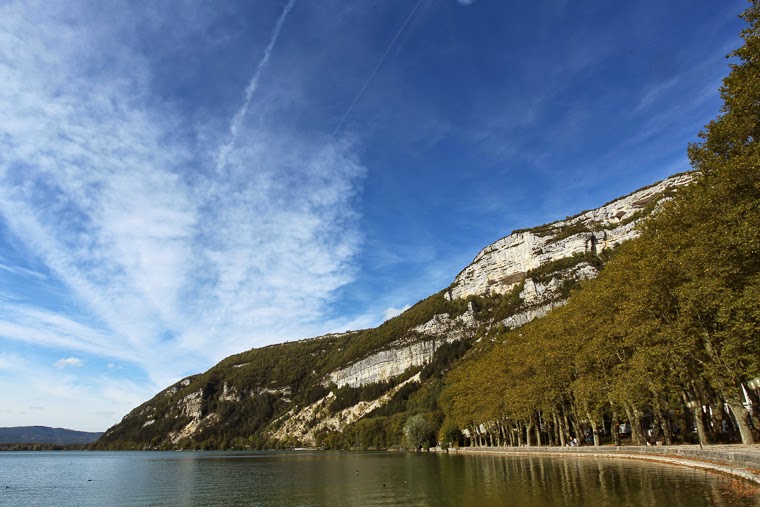


Sitting in the warm autumnal sun watching life on and around the lake.Tomorrow we will travel to Evian and cross the border to Montreux in Switzerland.


Friday, 21 November 2014

The Power of Nature.

September 17th 2014.  The day was beautiful and the sky full of migrating Swallows and House Martins.  This,very often, is a precursor to a storm. At lunch time, we watched huge white clouds rise, their tops levelled by the high atmospheric pressure.


The afternoon was hot and clear. In the early evening huge ominous Cumuli Nimbus pushed skyward.


 A storm brewing for sure.


One sinister looking cloud and within it flashes of lightening.


Ever closer.


As it towered towards us, the Swallows and House Martins seemed ill prepared, they flew on towards the storm.


Hard to photograph, but you can see them here.


Wind, rain, hail, thunder, lightening and rainbows.


In the strange after glow we looked for the Swallows and House Martins, hopefully they continued safely!


All is now passed, a calm descends, but we have been reminded of the power of nature
and our very small presence in the universe.

Juvenile Nightingale in the garden

It had been a few years, since we had such good views of a Nightingales in our garden, as with this adult bird, seen below taken some years ago.


This adult may be the parent bird, photographed a week before the juvenile.

A juvenile bird spent an afternoon at the bottom of the garden, energetically looking for food. 


We are unsure if it is a fledgling from a nearby nest or perhaps it is just resting and feeding on it's long journey to Africa.


A special moment, most sightings of Nightingales are like below, from a distance in the early spring, as they sing their beautiful song.


I hope our juvenile will return safely next Spring, and serenade our nights,
because, to hear a nightingale's song, trilling forth in the darkness, is one of the most beautiful sounds in the world.

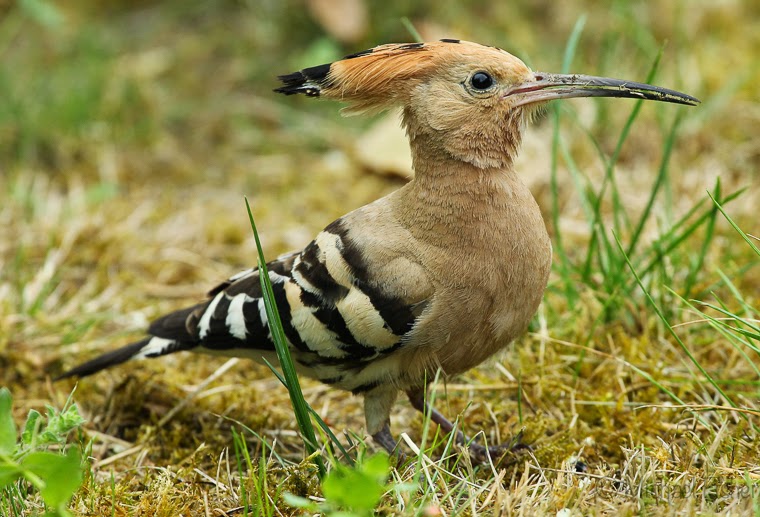
Hoopoe, Upupe epops, bird with Red Indian chief's head dress

We are lucky to have this lovely bird visit our garden during the breeding season—not that we have ever discovered a nest site—to secretly watch the comings and goings, as we have been privileged to do in Spain. The following set of photographs were captured in late July in our garden.


Looking like a Red Indian chief, the crown up after landing.


Straight to the main chance, the food search.


A grub is soon found.


How do you get that down the beak?


There it goes, down in one!


A wasp has gotten quite close to the Hoopoe, allowing for a close study of this strikingly coloured bird's defensive strategy.


Like a Flamenco dancer, the bird flashes its tail and raises its wings, displaying the black-and-white danger signs to the predator.


The crown raised, followed by swishing of its wings right and left.


Ole!


Danger passes (the wasp has flown away), and the crown starts to recede.


A genuinely distinctive summer visitor who winters in Africa. If you have them in your area, keep your grass or weeds cut short (as above). This will help them in their search for food.
This quirky bird is a delight to observe, and we hope you, too, have the chance to see it.

Happy Days!


Tuesday, 11 November 2014

Dorset countryside and a peek at Hampshire.

Leaving Wimborne behind and following the river Allen, on a winding footpath that heads north towards Witchampton, one soon forgets the bustle of normal Dorset life. It is Saturday, yet I see only five people on various forms of transport the entire day, I love it. My walk winds and climbs as far as the Crichels and back.


The meandering river Allen.


A little diversion from the footpath takes you to this wonderful old bridge, what a memorable sign, if only today!


A banded Demoiselle, enjoys the suns warmth.


One of the two Swans we heard arrive during the night. Purple-loosestrife grows along the bank of the little tributary.


Just outside of  Wimborne twenty plus flycatchers feed in the sunshine around a copse of trees.
  

In the sunny areas of woodland, Chiffchaffs are abundant as they slip south.


A young Chiffcaff takes time for a preen.


The farmers have taken the Winter Wheat and the fields are bare or stubble.


 Scarifying the fields.


The Northern Weatears are loving it , food for the journey. For they are Portland bound, then across to France, into Spain, Tarifa and across to Africa.


Above Witchampton a little farmer's set aside, is a feeding ground for 15 plus Whinchats also passing  through to Portland. Today I have seen so many passerines headed for the coast and that huge crossing to France!


I know that sound! how amazing to be just south of that old war time airfield at Tarrant Rushton, when two Lancaster bombers fly over with a Spitfire escort! Wow! pure nostalgia.


Whitethroats, who will also head for Portland and their journey back to Africa, quietly passing in the hedgerows.


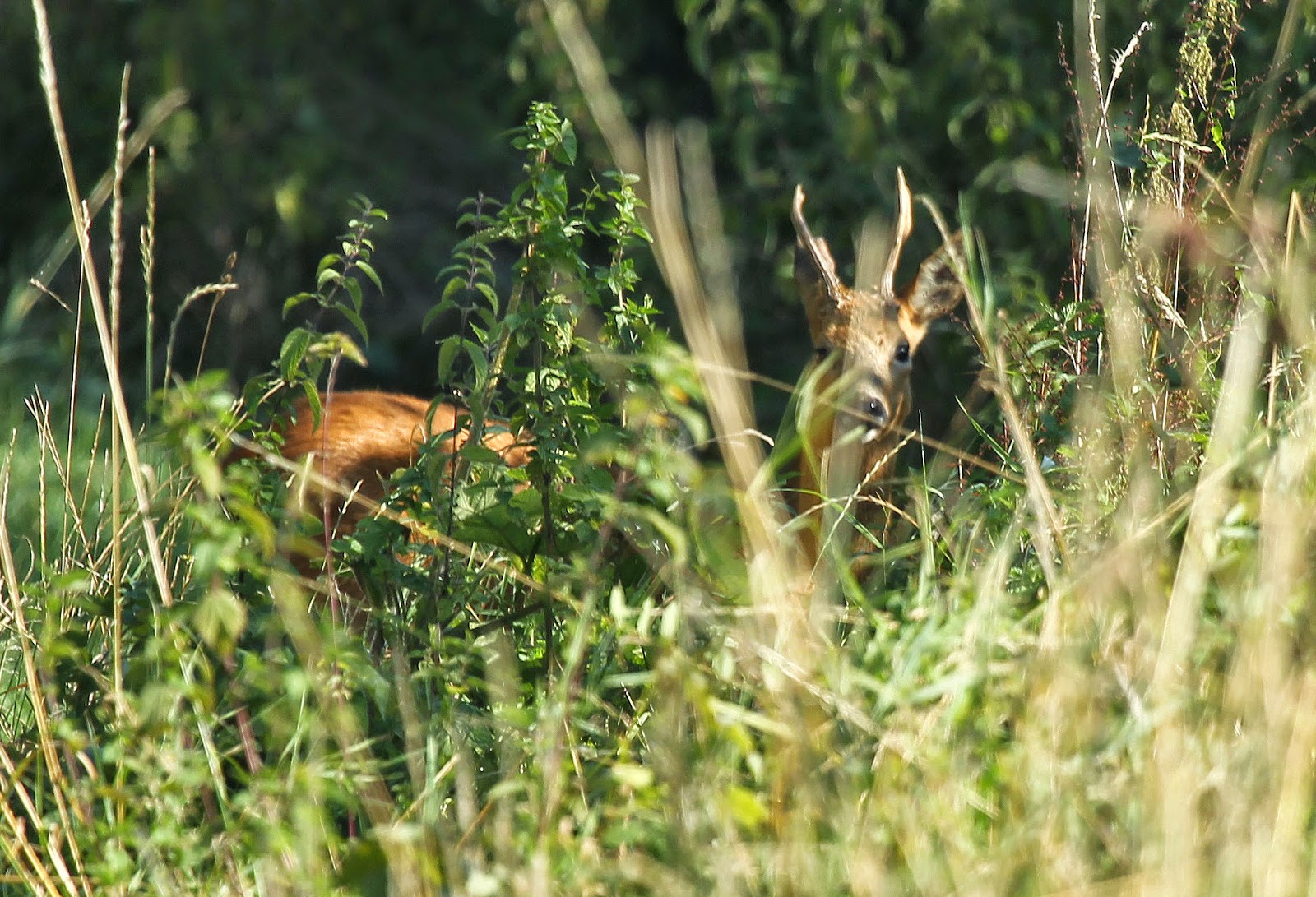
A Roe buck watches from the woodland, as I pass in the countryside.


We stop for coffee at Barton-on-sea, with its beach huts and beyond  Friars Cliff and Mudeford.


Milford-on-sea, the Isle Wight nearly touchable in the back ground, Godwits feed before the tide.


Not the photo I expected at Milford-on-sea. Little Egret.


A summer holiday, crabbing net at the ready.


Under a brooding sky, people in silhouette.


A  Meadow Pipit watches us, the breeze ruffles it's feathers and we shiver. Time to head home.